


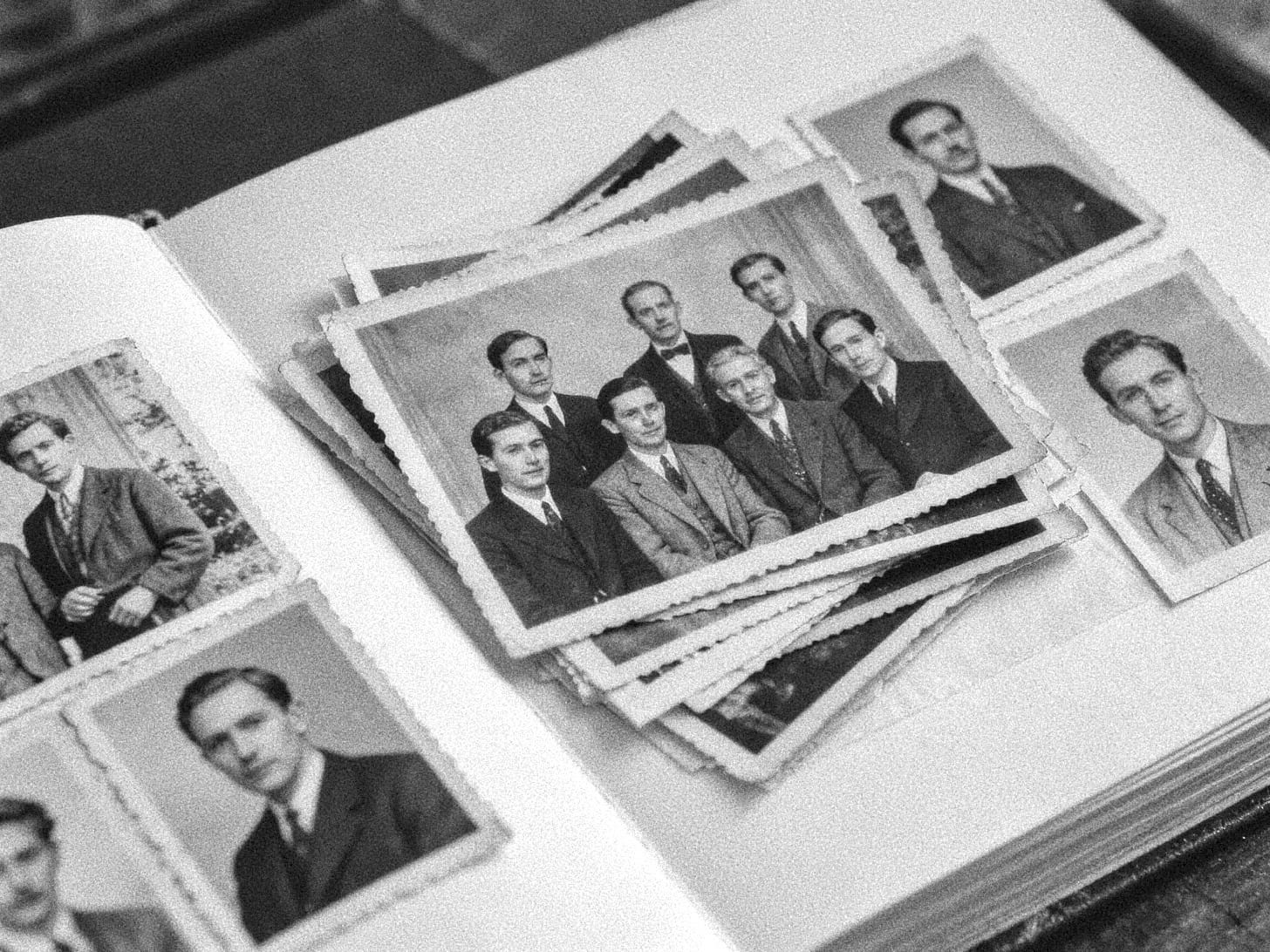
For most of photography’s life, the camera has carried a kind of moral authority. “The camera doesn’t lie,” we were told. Seeing is believing. A photograph is proof.
And yet, from almost the moment the first images were fixed onto paper and plates, photographers have been lying their asses off.
Not always maliciously. Often beautifully. Sometimes politically. Sometimes for money. Sometimes just for fun. But the idea that photography was ever a pure, neutral, objective record of reality is a myth. A very useful myth. And a very persistent one too.
I learned that lesson early, in a way that stuck.
MY FIRST FAUXTO
Years ago, I was friendly with an antiques dealer who collected classic art and vintage photographs. His cabinets of curiosities were filled with objects that felt like they had lived several lives before finally ending up on his shelves.
One day, he showed me a photo he was particularly proud of: a vintage composite of a nude male Olympian, posed heroically, like a figure from a classical statue.
Except something was…missing.
The man’s genitalia had been meticulously airbrushed out. Not blurred. Not hidden by shadow. Gone. The retouching was so artfully done he looked less like a human being and more like a Ken doll. Smooth. Anatomically impossible. A sexless ideal.
I remember staring at the fauxto longer than I probably should have, trying to figure out what unsettled me more: the nudity or the erasure.
This wasn’t Photoshop. Or even AI. This was old-school, analog photo compositing. Someone had taken the original image and decided reality needed editing. Not to make it more erotic, but to make it more acceptable. More sellable. More “art.”
That fauxto cracked something open in my brain. It was the first time I consciously realized that even “vintage” photographs, ones that feel authoritative just because they’re old, are often deeply artificial. Not captured. Composed. Constructed.
THE ORIGINAL SINS: DARKROOM ALCHEMY
In the analog era, most photo fuckery happened in the darkroom.
Dodging and burning, selectively lightening or darkening parts of an image, was not a cheat. It was standard practice. Ansel Adams, patron saint of “pure” landscape photography, famously used extensive dodging and burning to create his dramatic skies and glowing mountains. His negatives were raw material. The final print was the artwork.
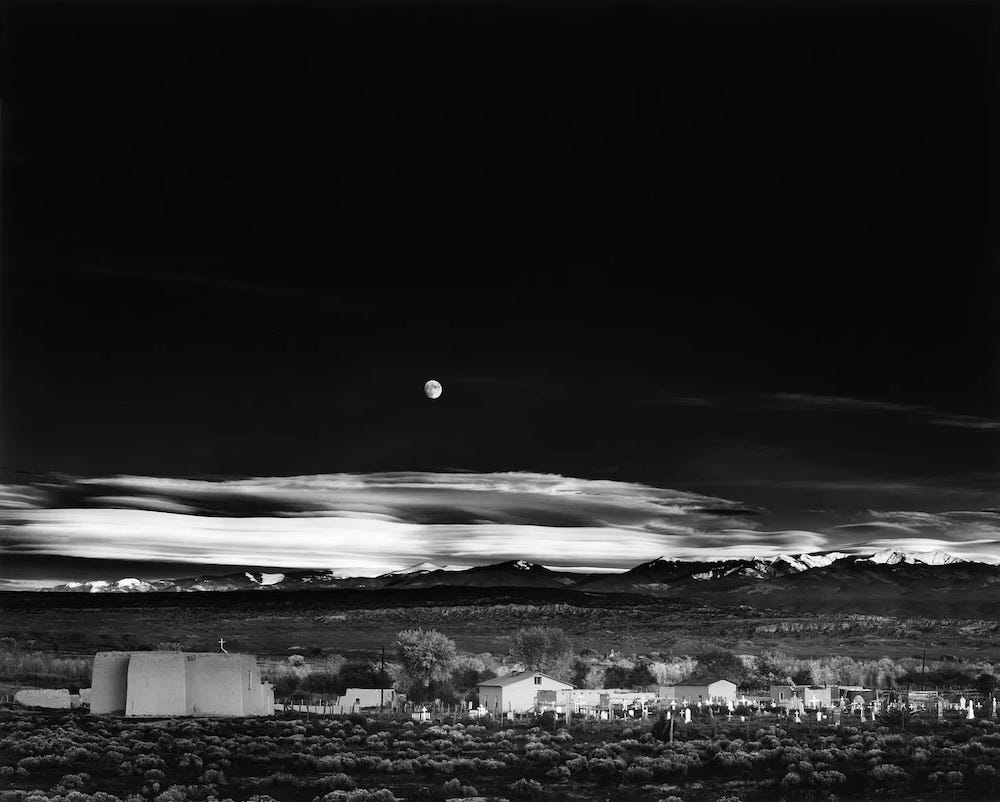
Then there was airbrushing. By the early 20th century, professional retouchers were smoothing skin, removing wrinkles, reshaping faces, erasing blemishes, and “improving” bodies for fashion, advertising, and celebrity portraits.
Photoshop didn’t invent beauty filters. It just made them faster.
And let’s not forget cropping. Cropping is editing. Framing is editing. Choosing where to stand, what to include, what to exclude. These are all manipulations of reality, baked into the very act of taking a photo.
The truth is, photography has never been about what happened. It has always been about what someone decided to show you.
BEFORE DEEPFAKES: SCISSORS + GLUE
Collage and compositing were already thriving in the 19th century.
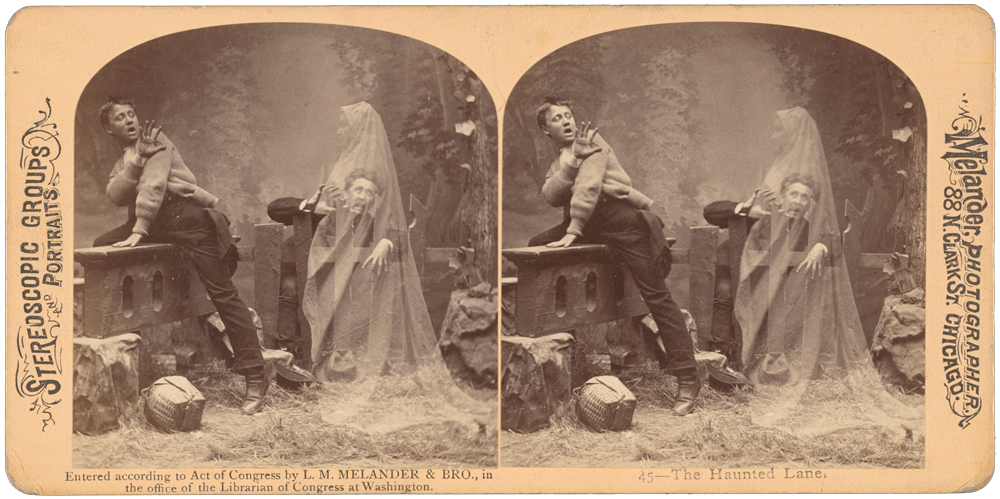
Photographers were cutting and pasting negatives to create “impossible” scenes: ghostly apparitions, floating heads, people posing with themselves, crowds that never existed, skies swapped in from entirely different days.
Victorian “spirit photography” convinced grieving families that the dead were appearing beside them in photos. The ghosts were fake, but the feelings were real. That combination has always been the sweet spot for visual deception.
Political manipulation came early too. Stalin erased enemies from photographs. Mao did the same. So did everyone else. If you didn’t like someone anymore, you didn’t cancel them. You literally removed them from history.
No AI required. Just scissors, chemicals, and control over the narrative.
THE PHOTOSHOP PANIC
When Photoshop arrived in 1990, it triggered a moral freakout.
Suddenly, anyone with a computer could do in minutes what used to take hours or days in a darkroom. Faces reshaped. Bodies liquefied. Objects removed. Entire realities constructed from scratch.
Magazines got caught slimming models to impossible proportions. News outlets were busted cloning smoke, crowds, and explosions to make images more dramatic. The fear was that photography had finally lost its last connection to truth.
But really, Photoshop didn’t break photography. It just exposed what had always been true: the connection to truth was never that strong to begin with.
AI DIDN’T START THE FIRE
Now we’re in the era of AI-generated images and deepfake videos. And once again, we’re collectively acting shocked.
This changes everything, we say.
Now we can’t trust anything we see.
Clutch those pearls, gurrrls!
The truth is we could never truly trust photos in the first place.
The only real difference I can see is that, as AI gets better by the day, it’s becoming increasingly difficult to distinguish real photos from real fauxtos. Not just obviously fake images, but convincing ones. Plausible ones. Images that feel documentary even when they were generated from a text prompt and stitched together from the visual DNA of millions of photographs the model was trained on.
What used to require specialized skills, equipment, and time can now be done by anyone with a prompt. The barrier to entry has collapsed. The volume of altered imagery has exploded. The lies are cleaner. The seams are harder to see.
AI didn’t create visual deception. But it did democratize it.
THE REAL PROBLEM WAS NEVER THE TOOLS
Every generation blames the new technology.
Darkrooms ruined photography.
Airbrushing ruined photography.
Photoshop ruined photography.
Now AI is ruining photography.
Same panic. Different tools.
But the problem has never been the tech. The problem is we want photographs to be evidence, while also wanting them to be art, marketing, propaganda, fantasy, memory, and identity.
Those goals are incompatible.
We want realism. But we also want magic.
We want the truth. But we also want fantasy.
We keep telling ourselves that the camera is honest, that it somehow records the world objectively, without bias or intention. Meanwhile, photographers, retouchers, compositors, and artists have been bending reality since day one: choosing what to include, what to exclude, what to enhance, what to erase.
Long before algorithms and neural nets, there were human hands making aesthetic, commercial, and ideological decisions about what “reality” should look like.
The tools may have changed, but the impulse hasn’t.
SEEING HAS NEVER BEEN BELIEVING
That Olympian photo still sticks with me. Not because of the nudity, but because of the edit. The invisible hand that decided what a human body was allowed to look like. The quiet authority of the alteration.
It was my first real encounter with a fauxto. But it wasn’t my last. By a long shot.
The camera was never a witness. It’s always been a storyteller.
Every photograph is a performance: by the subject, by the photographer, by the editor, by the culture that decides what the image means. Even the most “documentary” photo is still filtered through choices, timing, framing, and intention.
AI just makes the performance harder to detect.
What’s actually dying isn’t photography. It’s the comforting illusion that images ever meant truth in the first place. And maybe that’s not a tragedy. Maybe it’s just the final reveal of a very old trick.
Keep calm and look closer!
Clint 🌈✌️
COLLIDE PRESS is a reader-supported publication.
Please consider becoming a Paid Subscriber or Patron.
NEW + NOW PLAYING
COMING SOON = COLLIDE PRESS LIVE
FEB 2026 HANGOUT
Monday, February 9
8-9am Pacific via Zoom
FEB 2026 HAPPY HOUR
Friday, February 20
3-4pm Pacific via Zoom
Register = Free
BORN THIS WAY ON THIS DAY
02-06 = Anne, Queen of Great Britain (1665-1714) = English royalty 🌈
02-06 = Ramon Novarro (1899-1968) = Mexican-American actor 🌈
MAN CRUSH OF THE DAY


“Better Dancing makes Better Lovers.”
Ramon Novarro
Clint,
THE TOOLS WERE NEVER THE PROGLEM
SEEING HAS NEVER BEEN BELIEVING
So true. We forget and think these are the worst of times!
Fondly, Michael
Danged Clint. Photography is all double dutch to me. I have/had some forays into owning credible cameras, as I have posted about previously. I even had a Polaroid early B/W for.... well don't ask 😯 then early digital camera. Finally smart mobile phones (cell 🇺🇸) and it's still all double Dutch 😎 I'll leave it to those that can. Cheers DougT 🏴🇬🇧