



Every once in a while, I run across a name from LGBTQ history that feels bigger than the person attached to it. Lawrence Ferlinghetti is one of those names.
For a long time, I’ll admit, I didn’t know much about the man or his work. I had heard his name in passing, but that was about it. But if you care about poetry, publishing, independent bookstores, free speech, or San Francisco, sooner or later you hear his name spoken with a kind of reverence.
City Lights. The Beats. Howl.
At first it almost sounds like literary folklore. A half-remembered story from another era when poetry somehow mattered enough to get people arrested.
But the more you learn about Ferlinghetti, the more the myth gives way to something clearer. His life mirrors the long arc of the twentieth century.
He was born in 1919. His father died before he was born, and he spent much of his childhood moving between relatives and foster homes.
During World War II he served in the Navy and later witnessed the aftermath of Nagasaki. Seeing a city flattened by an atomic bomb left a permanent mark on him. That shadow runs through his poetry and his politics for the rest of his life.
After the war he studied literature in Paris and eventually landed in San Francisco, a city that has always had a gravitational pull for artists, outsiders, and people who just don’t quite fit anywhere else.
That’s where his real story begins.
If you’ve ever spent time in San Francisco, there’s a good chance you’ve wandered into City Lights Bookstore in North Beach. Even if you didn’t know who Ferlinghetti was, you’ve hopefully felt the energy of the place.
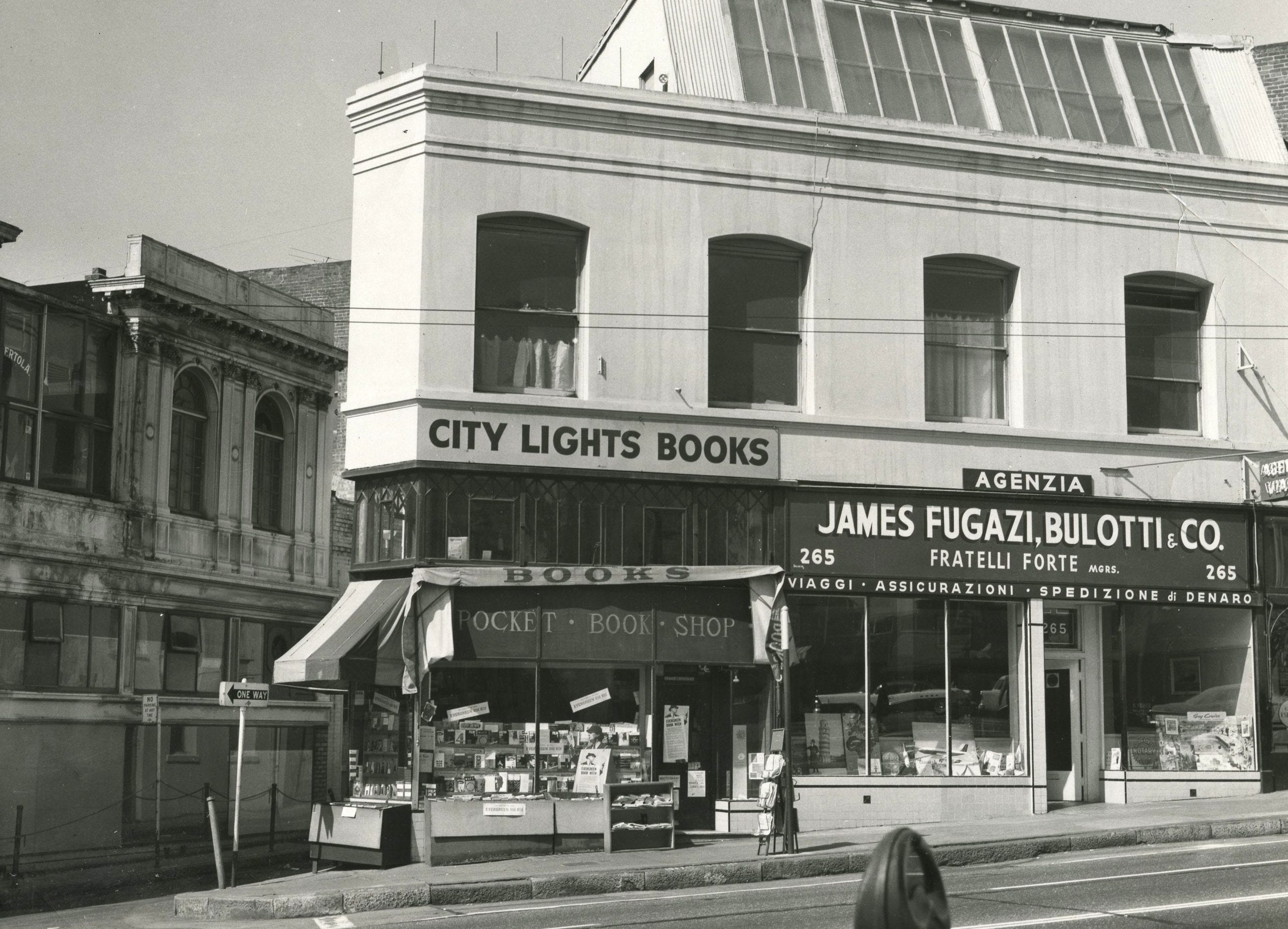
City Lights is not just a bookstore. It’s a cultural landmark. Its shelves are packed with political manifestos, experimental poetry, independent zines, international literature, and more than a few ideas that might make polite society a little uncomfortable.
In 1953, Ferlinghetti co-founded City Lights.
In 1956, City Lights published Allen Ginsberg’s Howl and Other Poems.

Today, it’s hard to fully explain how explosive that poem was at the time. It was raw, angry, queer, ecstatic, and completely uninterested in behaving itself. Ginsberg tore into the machinery of American conformity with a voice that was too honest for the authorities’ taste.
So they arrested the publisher. For publishing a poem.
The obscenity trial that followed became one of the most important free speech cases in American literary history. After nearly a year of legal wrangling, the judge ruled that Howl was not obscene and, in fact, had redeeming social importance.
The decision loosened the grip of censorship on American publishing.
Ferlinghetti never seemed interested in being the hero of that story. Through City Lights Publishing, he created the Pocket Poets Series, small, inexpensive books designed to put poetry directly into people’s hands. You didn’t need a university degree or membership in a literary club. You could carry a poem in your pocket.
For decades, he published writers who were experimental, political, queer, immigrant, or simply too strange for mainstream publishers. He believed bookstores should be places where ideas collide, not quiet retail spaces where nothing uncomfortable is allowed to happen.
And he kept at it. For more than seventy years.
Ferlinghetti lived to be 101. His life stretched from the final years of World War I to the digital age. Through it all, he wrote poems, painted, protested wars, and defended the fragile ecosystem that allows art and free thought to survive.
I’ve been thinking about the kinds of people who make creative worlds possible. Not just the artists. But the connectors and risk-takers. The people who build the spaces where ideas can meet.
Ferlinghetti was one of those people. He understood something simple but powerful: Culture rarely grows in isolation. It grows in places.
City Lights was a home for restless minds. A place where poets, outsiders, and troublemakers could find each other. A place where someone could walk in off the street, pick up a thin paperback of poems, and suddenly realize the world might be bigger than they thought.
The more I think about it, the more I suspect that’s the kind of legacy most creative people secretly hope for.
Not fame. Not myth.
No, what most creatives want to be remembered most for is opening doors for the next generation.
Keep calm and read on!
Clint 🌈✌️
COLLIDE PRESS is a reader-supported publication.
Please consider becoming a Paid Subscriber or Patron.
25K CELEBRATION OFFER = 25% OFF SUBSCRIPTIONS
25K CELEBRATION SALE = 25% OFF ART PRINTS
thru 03-25-26
FROM THE ARCHIVES
BORN THIS WAY ON THIS DAY
03-24 = Bob Mackie (1939- ) = American costume designer 🌈
03-24 = Jim Parsons (1973- ) = American actor and producer 🌈
03-24 = Lawrence Ferlinghetti (1919-2021) = American poet, publisher, and City Lights Bookstore co-founder 🌈
03-24 = Margarethe Cammermeyer (1942- ) = Norwegian-American officer 🌈
03-24 = Tig Notaro (1971- ) = American comedian and actor
MAN CRUSH OF THE DAY


“I think if there’s a great depression there might be some hope.”
Lawrence Ferlinghetti“We were just a one-room bookstore; we didn’t have any money for lawyers.”
Lawrence Ferlinghetti
Bravo, Clint! As is customary for your writing -- beautiful and thoughtful as well as honorable. All this and images of enticing men. Cheers and hugs to you.